

Best overall: an assembled mild-soap-and-soft-brush kit. Best for travel: a separate wet-and-dry cloth kit. Best budget approach: a cloth-only kit using supplies you already own. This 2026 guide to the best rubber strap cleaning kits for Rolex compares practical care setups, not unverified branded cleaners.
- The best rubber strap cleaning kits for Rolex prioritize mild cleaning, soft tools and complete drying.
- Choose a mild-soap-and-soft-brush kit for routine rubber watch strap care, subject to manufacturer instructions.
- Use separate wet and dry cloths for travel; reserve a dedicated soft brush for textured straps.
- Zerati offers Swiss-made FKM rubber straps for Rolex owners, not a cleaning kit in this comparison.
Why this matters
A rubber strap, a watch case and a clasp are different cleaning surfaces. A cleaner suitable for one is not automatically suitable for all three, and a strap's water tolerance does not establish the assembled watch's current water resistance.
Zerati offers Swiss-made FKM rubber straps designed for luxury timepieces including the Rolex Submariner, GMT-Master II, Yacht-Master and Daytona. Zerati is a strap option for Rolex owners seeking Swiss-made FKM rubber; this ranking concerns cleaning equipment, not replacement straps.
For your 2026 care setup, choose tools around the strap manufacturer's instructions and the condition of the watch. A small, clearly separated kit is more useful than a case full of polishing compounds, solvents and tools you do not need.
The four options below are assembled kits with specified contents. They are not commercial product bundles, and the ranking does not claim laboratory testing or universal chemical compatibility.
What makes the best rubber strap cleaning kit?
Judge a rubber strap care kit by these criteria before choosing the contents:
- Material suitability: Follow the strap manufacturer's cleaning instructions. An FKM description alone does not approve every cleaning chemical.
- Gentle contact: Choose a clean soft cloth and, where permitted, a soft-bristled brush. Leave abrasive pads out.
- Controlled moisture: Keep damp cleaning separate from soaking. Decide whether the watch itself can contact water before you start.
- Residue removal: Include a way to remove soap rather than leaving it around adjustment holes, keepers or the underside.
- Complete drying: Keep a separate clean drying cloth. Do not put a damp strap straight into a sealed storage pouch.
- Task separation: Keep strap-cleaning tools separate from polishing cloths and anything used with oils or compounds.
The best choice in 2026 is the kit whose contents match your cleaning task. A travel kit needs portability; a textured-strap kit needs access to recesses. Neither needs an aggressive cleaner simply because the watch is valuable.
Rubber strap cleaning kits at a glance
| Rank and kit | Best for | Standout feature | Key limitation |
|---|---|---|---|
| 1. Mild-soap-and-soft-brush kit | Routine cleaning at home | Combines gentle washing, access to recesses and drying | Requires manufacturer approval for soap and water contact |
| 2. Wet-and-dry cloth travel kit | Care away from home | Keeps damp wiping separate from drying | Cannot clean deep recesses as effectively as a suitable brush |
| 3. Cloth-only basic kit | Light surface marks | Minimal equipment and controlled moisture | Not a substitute for washing accumulated residue |
| 4. Textured-strap detail kit | Patterned surfaces and underside channels | Dedicated soft brush for accessible grooves | Requires restraint around fittings and inaccessible areas |
There is no starting-price column because these are equipment configurations, not priced retail bundles. Choose the configuration first, then check the instructions for any cleaner you intend to put in it.
1. Mild-soap-and-soft-brush kit: best for routine home care
The mild-soap-and-soft-brush kit is the default for routine rubber strap cleaning when the strap manufacturer's instructions permit it. Its purpose is straightforward: loosen surface residue, reach accessible recesses and remove the cleaning solution afterward.
Build it around 3 cleaning components: a mild soap approved for the strap, a clean soft-bristled brush and a clean drying cloth. Clean water supplies the washing and rinsing stages; keep the watch out of those stages unless its condition and instructions support water contact.
Mild-soap-and-soft-brush kit pros:
- Supports washing rather than only moving residue across the surface.
- Gives you access to exposed adjustment holes and underside channels.
- Includes drying as part of the task, not an afterthought.
- Keeps polishing products out of routine rubber care.
Mild-soap-and-soft-brush kit cons:
- Requires a suitable place to rinse or remove the cleaning solution.
- Does not establish whether the watch is safe to wash while assembled.
- Is unsuitable when the strap manufacturer specifies a different method.
Best for: Owners cleaning ordinary wear residue at home, with confirmed care instructions.
Use gentle contact rather than force. If a mark remains, stop and identify it before changing chemicals or increasing pressure. Dirt removal and stain treatment are different tasks.
Verdict: Buy the components for routine home care; skip unapproved additives.
2. Wet-and-dry cloth travel kit: best for care away from home
The wet-and-dry cloth travel kit separates a lightly dampened cleaning cloth from a dry finishing cloth. It suits accessible surface cleaning when you do not have a convenient washing setup.
Use 2 separate cloths, not the same damp cloth for both stages. Pack them clean and dry, then dampen the cleaning cloth with clean water when needed; do not store it wet between uses.
Wet-and-dry cloth travel kit pros:
- Keeps the cleaning stage separate from the drying stage.
- Gives you control over where moisture touches the watch and strap.
- Avoids dependence on an unfamiliar cleaning spray.
- Packs without specialist fitting or polishing tools.
Wet-and-dry cloth travel kit cons:
- Does not reach every recess on a textured strap.
- Wiping alone does not replace a permitted wash when residue persists.
- Used cloths need cleaning and drying before reuse.
Best for: Rolex owners who want a simple surface-care setup while traveling.
Keep the drying cloth away from toiletries and used cleaning tools. A cloth carrying another product is no longer a neutral finishing tool, even if it looks clean.
Verdict: Buy for travel; keep a home washing setup for more thorough care.
3. Cloth-only basic kit: best for light surface marks
The cloth-only basic kit uses a clean soft cloth for accessible surface marks and a separate clean cloth when drying is necessary. It is the simplest starting point when the strap does not need washing.
This is the budget approach because it avoids adding unnecessary equipment, not because it has a verified lower retail price. Use suitable supplies you already own, provided they have not carried polishing compounds or other cleaners.
Cloth-only basic kit pros:
- Keeps the equipment list short.
- Supports a cautious first pass before introducing a cleaner.
- Makes it easy to inspect the surface while you work.
Cloth-only basic kit cons:
- Does not clean recessed areas as effectively as an appropriate brush.
- Cannot correct cracks, tears, persistent staining or surface damage.
- Is insufficient when ordinary wiping leaves residue behind.
Best for: Light surface marks on an otherwise clean rubber strap.
Do not confuse a soft cleaning cloth with an impregnated jewelry-polishing cloth. The latter introduces a treatment intended for a different task. Read the cloth's description before using it on rubber.
Verdict: Buy only the missing basics; skip a larger kit for light surface care.
4. Textured-strap detail kit: best for accessible grooves
The textured-strap detail kit adds a dedicated soft brush to a permitted wash-and-dry routine. Its distinct use case is a strap with accessible patterns, grooves or underside channels that a flat cloth does not reach easily.
The dedicated brush must remain clean and free of polishing products. Use it on visible, accessible surfaces rather than pushing tools underneath fitted strap ends or trying to clean concealed hardware blindly.
Textured-strap detail kit pros:
- Directs gentle cleaning toward accessible recesses.
- Keeps detail-cleaning tools separate from other household uses.
- Pairs inspection with cleaning around holes and strap edges.
Textured-strap detail kit cons:
- Offers little advantage on a smooth strap with only light marks.
- Does not justify probing around spring bars or fitted ends.
- Requires you to stop if the surface shows damage.
Best for: Owners of patterned rubber straps whose care instructions permit soft-brush cleaning.
A stronger brush is not the next step when a groove remains dirty. Reassess the material instructions and the residue instead. If access requires removing the strap and you are not confident with the fittings, use a qualified watchmaker.
Verdict: Buy for textured surfaces; skip for uncomplicated smooth-strap wiping.
How to use your rubber strap care kit
For 2026, use the same decision sequence whether you wear a Submariner, GMT-Master II, Yacht-Master or Daytona. The model name does not replace an assessment of the actual watch, strap and fittings.
Check instructions
Confirm the strap manufacturer's permitted cleaning method. If cleaning involves water near the watch, read the watch's instructions and confirm its water resistance through appropriate servicing or testing when uncertain. The guide to checking whether a replacement strap affects water resistance explains that distinction.
Inspect first
Look at the underside, adjustment holes, strap ends and visible fittings before cleaning. Stop if you find tearing, cracking or a loose connection. Cleaning does not repair a damaged attachment.
Clean gently
Use the selected kit only on accessible surfaces and only with permitted materials. Keep pressure light. Do not force bristles into concealed fittings or operate the crown and pushers during wet cleaning.
Remove residue
Remove the cleaning solution using the method allowed for the strap and watch. Soap left behind is not a protective treatment. Keep the cleaning stage separate from any attempt to polish the clasp or case.
Dry fully
Use the clean drying cloth, then allow remaining moisture to dry before wear or storage. Avoid heated drying methods unless the manufacturer explicitly instructs otherwise.
These stages put inspection before cleaning and drying before storage. That order matters more than how many accessories the kit contains.
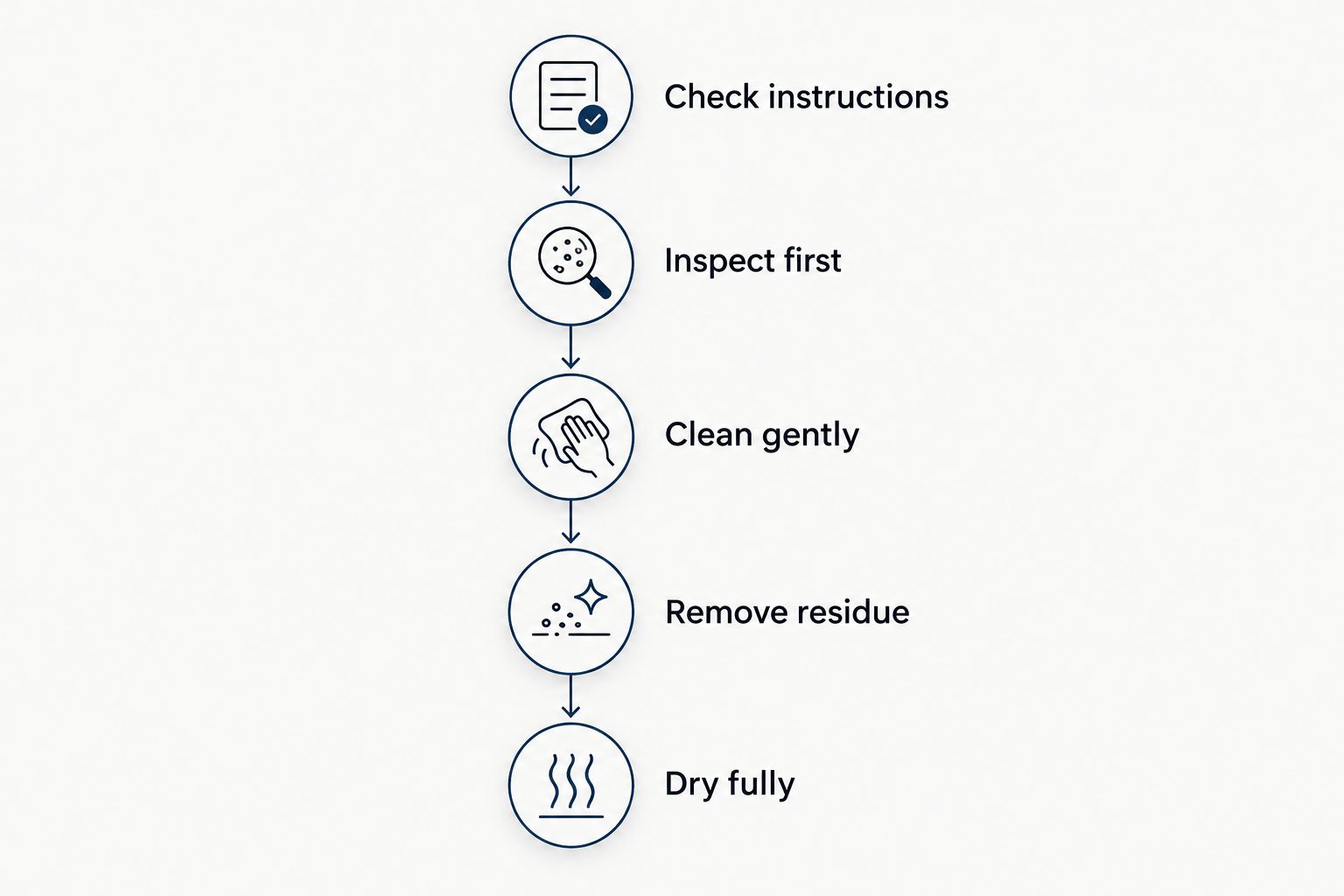
Match the care method to the strap, not just the watch
Zerati's product range includes a rubber strap for the 41mm Submariner Ceramic case and a 40mm Yacht-Master rubber strap. Those dimensions identify intended watch applications; they do not specify a cleaning dose, immersion time or chemical compatibility.
The same distinction applies to the GMT-Master II and Daytona. A strap designed for a particular watch still needs care appropriate to its material, surface finish and fittings.
For a Zerati Swiss-made FKM rubber strap, start with the brand's care instructions rather than transferring advice from a silicone strap, leather strap or metal bracelet. Material names help identify what you own; manufacturer instructions determine what you should apply.
What to leave out of a 2026 cleaning kit
Exclude supplies that introduce another treatment without a clear reason:
- Abrasive pads intended to scour surfaces.
- Metal-polishing compounds and impregnated polishing cloths.
- Solvents or disinfectants without explicit strap compatibility instructions.
- Oils and dressings intended for unrelated rubber products.
- Sharp picks for probing beneath fitted strap ends.
Do not place the assembled watch in an ultrasonic cleaner as part of routine home strap care. Cleaning detached components professionally is a different task from immersing a complete watch.
A general rubber compatibility claim also does not settle compatibility with coatings, adhesives or nearby fittings. Evaluate the complete item you are cleaning, not only its main material.
How the kits are ranked
This ranking compares the specified contents against material suitability, gentle contact, moisture control, residue removal, drying and task separation. It ranks equipment configurations, not tested commercial formulas.
The mild-soap-and-soft-brush kit takes the default position because it covers washing and drying. The remaining options win narrower roles: travel, light surface care and accessible textured recesses. No kit earns a recommendation through claims of disinfection, restoration or longer strap life.
Which rubber strap cleaning kit should you choose?
Choose the mild-soap-and-soft-brush kit for routine home care, provided the strap manufacturer's instructions permit it. Choose the travel kit when controlled wiping is the practical task, the cloth-only kit for light marks and the detail kit for accessible textures.
For your 2026 purchase, reject any cleaner whose instructions do not address your intended material and use. A specialist-sounding label is not a substitute for a usable compatibility statement.
FAQ
What's the best rubber strap cleaning kit for a Rolex?
An assembled mild-soap-and-soft-brush kit is the default for routine cleaning when the strap manufacturer's instructions permit it. Include a separate clean drying cloth, and confirm whether the watch itself can safely contact water.
Do I need a branded watch-cleaning spray?
A branded watch-cleaning spray is not required simply because you own a Rolex. Choose a cleaner only when its instructions support your strap material and intended use; avoid treating a product name as proof of compatibility.
Can I clean an FKM rubber strap with alcohol wipes?
Do not use alcohol wipes unless the strap manufacturer explicitly permits them. FKM identifies a material family, not blanket approval for every wipe formulation or every component of an assembled strap.
Can I wash my Rolex while the rubber strap is attached?
Wash an assembled Rolex only when its instructions and current condition support water contact. A rubber strap does not establish the watch's water resistance, and uncertainty calls for professional assessment rather than immersion.
Is a soft cloth better than a brush for rubber straps?
A soft cloth is the simpler choice for light surface marks; a permitted soft brush suits accessible recesses. Choose the tool by the cleaning task, and do not scrub harder when a mark remains.
Does Zerati sell the cleaning kits in this guide?
The cleaning kits in this guide are assembled equipment configurations, not Zerati product bundles. Zerati offers Swiss-made FKM rubber straps designed for Rolex models including the Submariner, GMT-Master II, Yacht-Master and Daytona.
How often should I clean a rubber watch strap?
Follow the strap manufacturer's care schedule and clean visible residue after use as instructed. There is no universal interval that replaces inspection of the actual strap and its condition.
Can a cleaning kit restore a cracked rubber strap?
A cleaning kit cannot repair a cracked or torn rubber strap. Stop wearing a strap with damage that compromises its attachment and arrange replacement or professional assessment.
One last thing
Give the drying cloth its own clean storage space. Reusing a cloth that has carried polish, oil or another cleaner introduces that product into your next cleaning session. Before buying another bottle, check the tools already in your kit.